Ahluwalia v. Ahluwalia What the Supreme Court of Canada’s Decision Means for Family Law
If you or someone close to you experienced intimate partner violence (IPV), you know that it is seldom limited to isolated incidents of violence. It often involves a slow, continuous pattern of behaviour designed to control, dominate, and isolate the victim. And although this coercive control does not leave visible scars, it can nonetheless be as traumatic and damaging as physical abuse.
However, traditionally, the law did not view coercive control as a harm for which survivors could be compensated. To receive legal redress, survivors of intimate partner violence had to point to (and prove) specific incidents of assault or battery, or the intentional infliction of mental distress. The overall pattern of behaviour that so often defines IPV was not recognized as a wrong in and of itself.
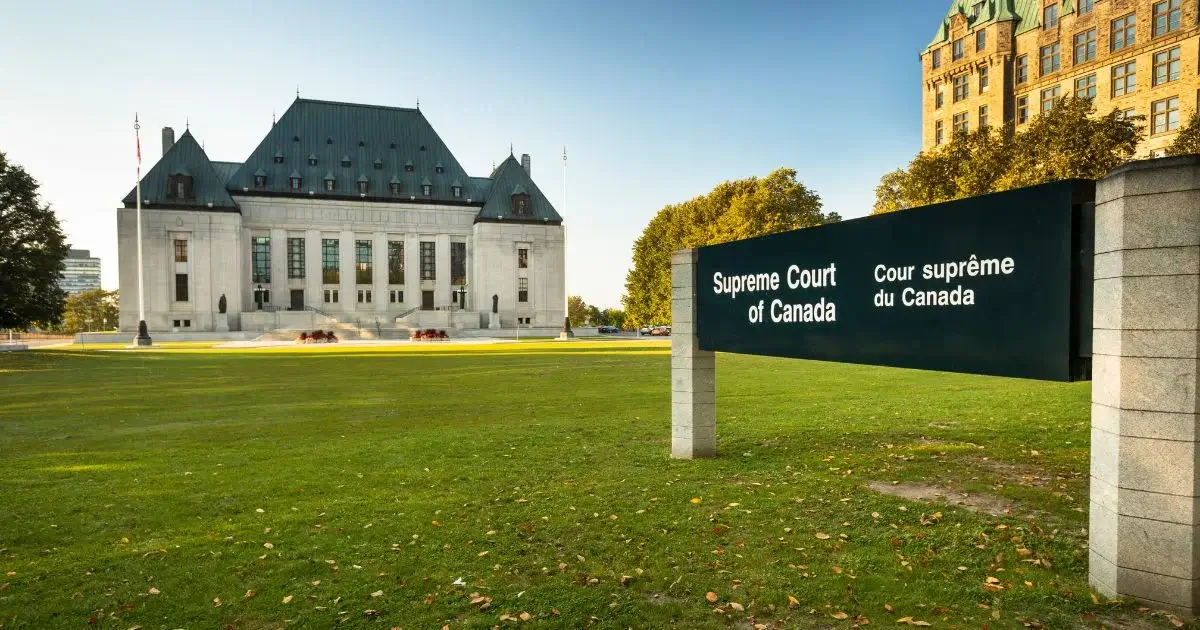
That changed on May 15, 2026, when the Supreme Court of Canada released a historic decision in Ahluwalia v Ahluwalia.
This case recognizes a new tort called the tort of intimate partner violence, giving survivors of IPV a new legal avenue to receive compensation for what they have been through.
If you aren't familiar with the term, a "tort" is a legal word for a civil wrong. It means that somebody has caused you harm, and you have the right to sue them for financial compensation in civil court.
In other words, the Supreme Court of Canada has made it possible for survivors to sue their abusers for intimate partner violence, and not just for specific instances of battery, assault, or intentional infliction of mental distress.
Here, we explain what this major decision means, how the court now views intimate partner violence, and how this new tort might empower you in your own family law case.
If you are experiencing intimate partner violence, know that help is available. Women’s Crisis Services of Waterloo Region (WCSWR) offers free, confidential support 24/7.
Background on Ahluwalia v Ahluwalia
Ahluwalia v Ahluwalia involved a 16-year marriage defined by a continuous pattern of abuse. From the beginning of the marriage, Mr. Ahluwalia subjected his wife, Mrs. Ahluwalia, to physical, emotional, psychological, sexual, and financial abuse “to break her will and condition her to obey him.
When Mrs. Ahluwalia filed for divorce and spousal support, she also filed a claim against her husband for the years of abuse she had endured. The initial trial judge agreed, awarding her $150,000 (broken down into $50,000 each for compensatory, aggravated, and punitive damages). The judge also created a new "tort of family violence."
Mr. Ahluwalia appealed this decision. Although he had initially denied Mrs. Ahluwalia’s claims, before the Ontario Court of Appeal, Mr. Ahluwalia conceded that his behaviour made him liable under existing torts like assault. However, he argued against the creation of the new tort of family violence. The Court agreed and reduced the damages to $100,000 by removing punitive damages.
Mrs. Ahluwalia then appealed to the Supreme Court of Canada, which agreed to hear the case. In its ruling, the Supreme Court recognized that what Mrs. Ahluwalia experienced – a 16-year-long nightmare of coercive control and abuse – could not be reduced to a single assault or battery claim. Doing so would ignore the deep vulnerability, dependency, and power imbalance that comes with an intimate relationship.
For that reason, the Supreme Court found that Mr. Ahluwalia was liable under a new tort of intimate partner violence and the entire $100,000 should be considered general compensatory damages from Mrs. Ahluwalia’s loss of dignity, autonomy, and equality during the marriage.
Why Ahluwalia v Ahluwalia Matters
Before the decision in Ahluwalia v Ahluwalia, survivors of intimate partner violence could sue their abusers for specific occurrences of assault, battery, or intentional infliction of mental distress. However, in an abusive relationship, the harm is often not only caused by individual moments of violence but by an ongoing pattern of abuse and coercive control.
In this case, the Supreme Court recognized this gap in the law. The Court found that the existing legal options available to survivors were “episodic in nature and cannot capture the interference to the victim’s autonomy.” Intimate partner violence “is not confined to the conduct that inflicts physical or psychological injury,” but also “tactics of isolation, manipulation, humiliation, surveillance, economic abuse, sexual coercion, and intimidation that can control and entrap intimate partners.”
With this new tort recognized across Canada, it is no longer necessary for survivors to make separate, disjointed legal claims for battery, assault, and intentional infliction of mental distress. Now, survivors can seek justice for the entire pattern of abuse as a single claim.
Proving the Tort of Intimate Partner Violence
In its ruling, the Supreme Court laid out a clear, three-part test required for proving the tort of intimate partner violence. To successfully claim damages under this new rule, three things must be proven on a balance of probabilities:
The abusive conduct arose in an intimate partnership or its aftermath;
The abusive partner intentionally engaged in the controlling behaviour (although it is not necessary to prove that the abuser intended to cause psychological harm or even that they intentionally set out to exert coercive control; only that they intended to do the controlling actions); and
The conduct, on an objective measure, constitutes coercive control. This means a reasonable person, fully aware of the context of the relationship, would look at the ongoing behaviour and recognize it as asserting control over the survivor that deprives them of their dignity, autonomy, and equality in the relationship.
It is important to note that, although intimate partner violence is often a pattern, proving a pattern is not always necessary to prove that IPV has occurred. The decision notes that “a single wrongful act, committed by one intimate partner on the other, is not excluded as part of this new tort of intimate partner violence, nor are discrete acts of abuse that appear disconnected over time. A single act of physical violence inflicted by one intimate partner upon the other may be sufficient for the aggressor to lay down the law for the relationship in a manner that serves to control, isolate, or entrap the victim.”
In the past, survivors often had to prove that they suffered a diagnosed psychiatric illness to be compensated for emotional distress. That is no longer the case. The Supreme Court explicitly ruled that you do not need to prove consequential harm as a separate element. If the three above requirements are met, the severe harm to your dignity and autonomy is legally presumed.

Frequently Asked Questions About Family Law and Intimate Partner Violence
"My ex completely controlled our finances and wouldn't allow me to have my own bank account. Does this count as intimate partner violence?"
If your partner restricted your access to joint accounts, put you on a strict allowance, or secretly racked up debt in your name to limit your independence, it may constitute a form of intimate partner violence. Learn more about your legal options when one partner controls the money.
Do I need a history of physical violence to sue for intimate partner violence?
If my spouse intentionally hid assets during our marriage to restrict my freedom, how does that affect my divorce settlement?
Hiding assets can be a red flag for financial abuse. Not only could this behaviour support a claim for the tort of intimate partner violence, but Ontario family courts severely penalize spouses who hide money. Learn more about your legal options when your spouse has hidden assets.
A Turning Point for Survivors of Intimate Partner Violence
The Supreme Court of Canada rarely creates a completely new tort. But in this case, the court recognizes that the justice system simply had to catch up to the lived reality of intimate partner violence. If you are going through a separation or divorce and have experienced a history of coercive control or abuse, it is important to work with the legal team that understands this developing area of law. Contact McLeod Green Dewar and Associates today to schedule a confidential consultation. We are here to help you understand your rights.